
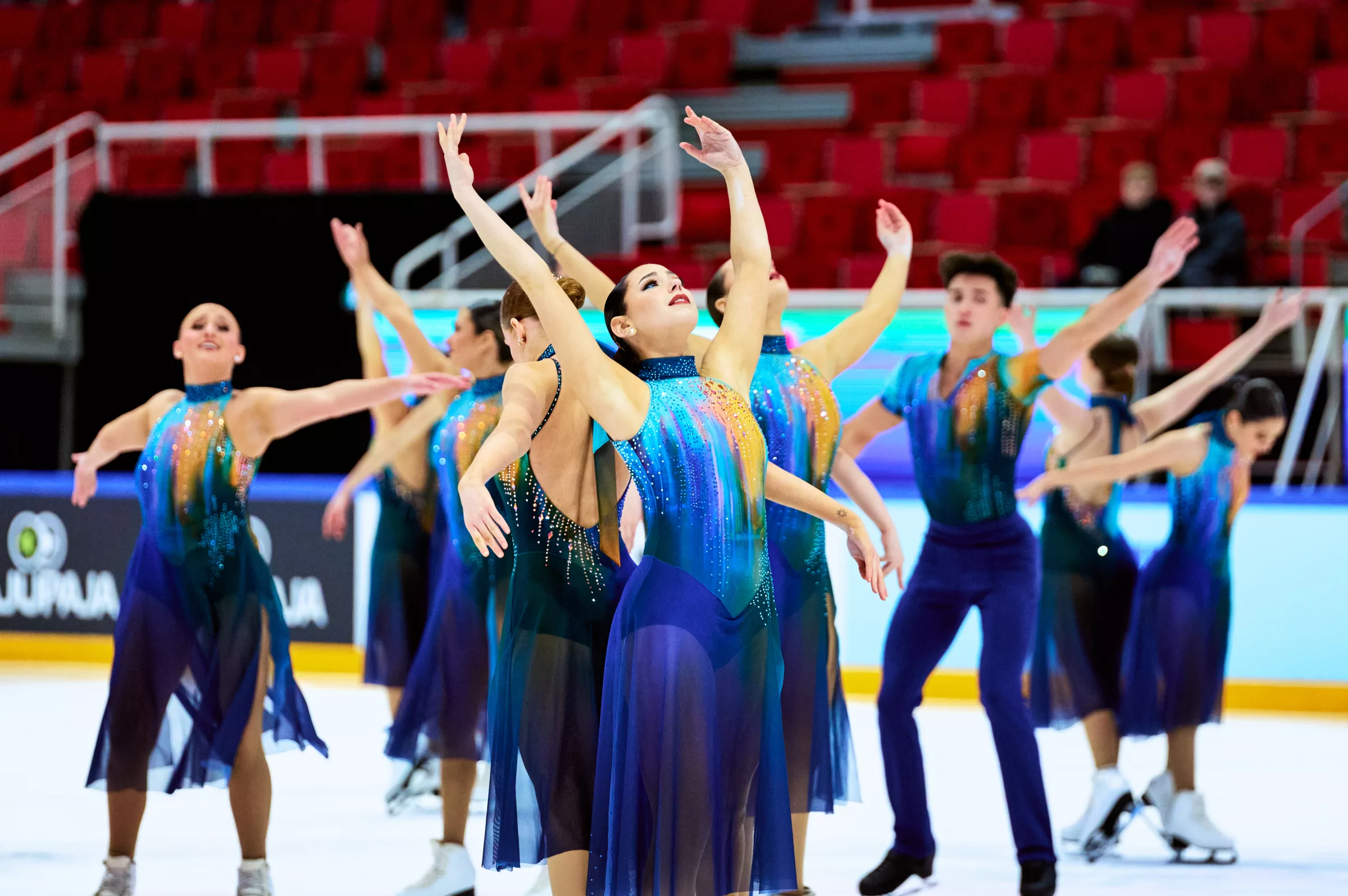
The four competitions of the 2025-2026 Challenger Series (Nottingham, Eindhoven, Boston, Turku) have served as a barometer in recent weeks.
Rather than reading the results event by event, the combined podiums highlight trends ahead of the World Championships: Finland ever-present at the top, Canada delivering when it fields its leading teams, and the United States regularly able to insert itself into the fight for the podium.
Seniors: Finland sets the benchmark trio, Canada answers with Les Suprêmes
In seniors, the overall read of the podiums across all four competitions is clear: the Finnish teams sit at the top of the standings. Team Unique win the Britannia Cup (237.44) and also take 3rd in Turku (233.71). Helsinki Rockettes, 2nd in Nottingham (226.72), move up another notch by taking silver in Turku (236.80). Marigold Ice Unity confirm their ability to be among the best with a win in Boston (221.77) and 5th in Turku (220.89).
Against this Finnish block, Canada stands out with a two-pronged dynamic: clear leadership from Les Suprêmes (win in Eindhoven, 228.07, then win in Turku, 238.22) and teams capable of aiming high with Nova Senior (3rd in Boston, 216.07; 6th in Turku, 217.45) and NEXXICE (4th in Boston, 207.86; 4th in Turku, 223.69). This depth, visible across two competitions, is a useful indicator heading into Worlds: it suggests an ability to stay in touch when the field tightens.
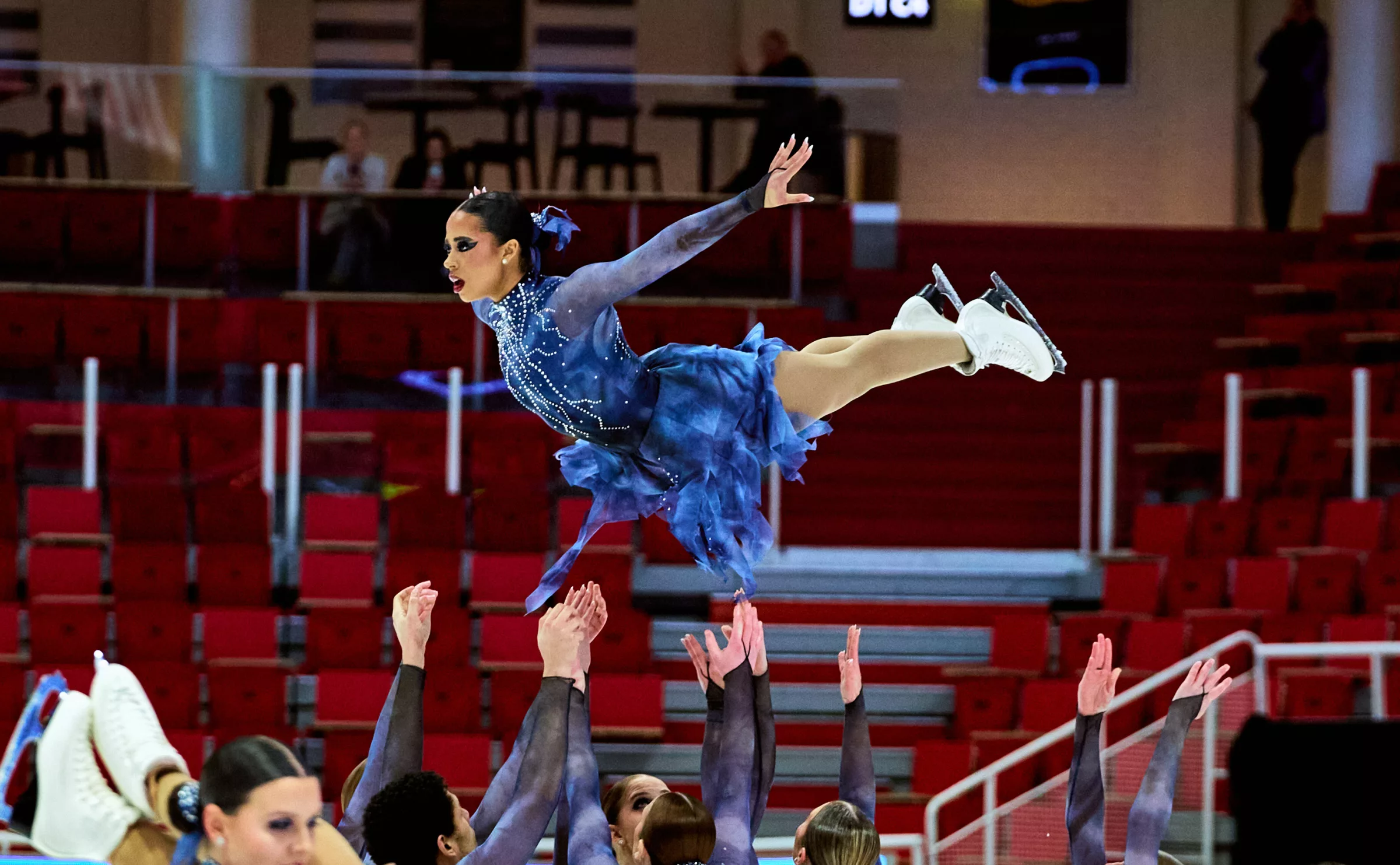 Teams Elite Senior, from the United States, at the Marie Lundmark Trophy. (Nuppu Humalisto - 2026)
The United States remain a major player, with podiums and near-podium finishes: Haydenettes take 3rd in Nottingham (221.86) and then silver in Boston (217.67). Skyliners (3rd in Eindhoven, 197.36; 5th in Boston, 197.86) and Teams Elite Senior (6th in Boston, 195.76; 8th in Turku, 188.40) round out a solid picture, even if the fight for victory appears, based on these results, more often locked down by Finland and Canada.
Behind the Finland–Canada–United States trio, a few teams are sending interesting signals: Ice on Fire (Italy) are 5th in Nottingham (194.14) and 7th in Turku (198.42), while Ice Fire Senior (Poland) place 8th in Eindhoven (161.16) and 7th in Boston (164.64). Hungary’s Team Passion improve between Nottingham (6th, 154.40) and Eindhoven (6th, 170.40). The United Kingdom, thanks to Icicles Senior, holds steady in mid-table (7th in Eindhoven, 161.79; 7th in Nottingham, 152.76).
These trajectories are not yet enough to shake up the top of the standings, but they can matter in a season where consistency and technical cleanliness are key.
Who could shine next at the Senior Worlds?
Based on the Challenger Series results, three takeaways stand out:
- Finland, with Team Unique, Helsinki Rockettes and Marigold Ice Unity, regularly near the top of the standings.
- Canada: Les Suprêmes show a high scoring ceiling (238.22 in Turku), and NEXXICE / Nova Senior reinforce the idea of a delegation capable of making an impact on multiple fronts.
- The United States: Haydenettes and Skyliners show podium / top-5 consistency across several events.
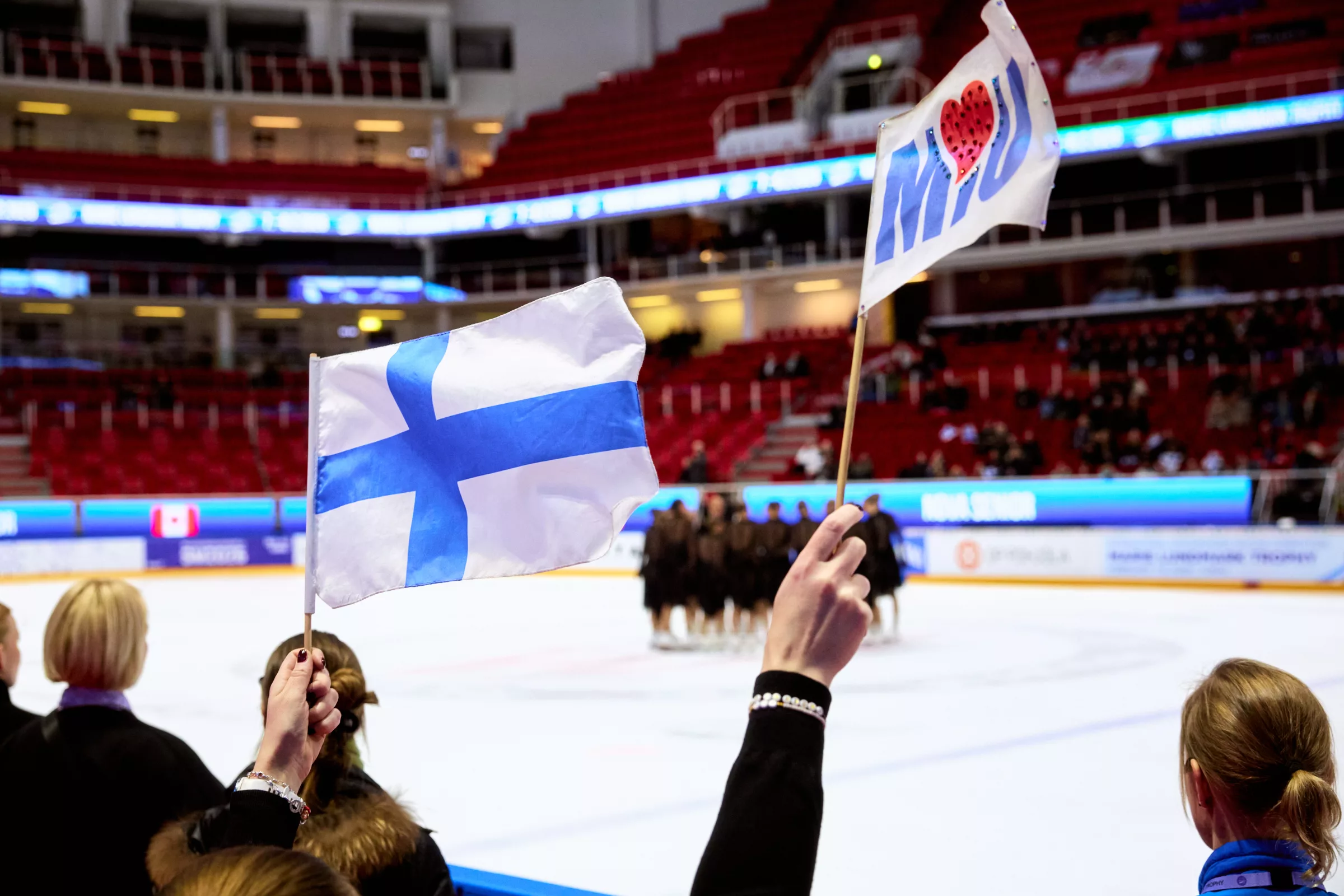 Finnish fans. (Nuppu Humalisto - 2026)
ISU World Standings: a consistency indicator to compare with the Challenger
To round out the picture, the ISU publishes the senior synchro World Standings.
This is a points-based ranking that aggregates results achieved over a period defined by the ISU, in order to reflect teams’ performance and consistency across multiple competitions, not just a single event.
In other words, the Challenger Series podiums provide a recent, telling snapshot of current form, while the World Standings aim to measure a longer-term trend through a points system.
To draw a precise parallel, you need to look at the exact positions and points of the teams in these rankings.